Abuja Residential: 7.5 kWp Solar + 16 kWh Battery
An Abuja home replaces about ₦255,000 a month in diesel, generator upkeep and grid units with an 11 kVA hybrid system, and earns it back in about 2.3 years
System Type
Residential solar + storage
Project Goal
Reduce diesel dependence and improve uptime
Coverage
Abuja, FCT
The Challenge
This Abuja home used about 18 kWh of electricity a day: a 1.5HP air conditioner in the main bedroom through the night, a fridge and a chest freezer, ceiling fans, a borehole pump, lighting, the TV and Wi-Fi, and the pressing iron and microwave. The grid carried roughly half of that. The other half came from a diesel generator that started every evening and whenever supply dropped, burning around 90 litres a month. Together that came to about ₦255,000 a month: around ₦57,000 in prepaid units, ₦175,000 in diesel, and roughly ₦25,000 more in servicing, repairs and fuel that went missing. The borehole pump and the AC starting together also meant any backup system had to handle a heavy surge, which ruled out a small inverter.
The Solution
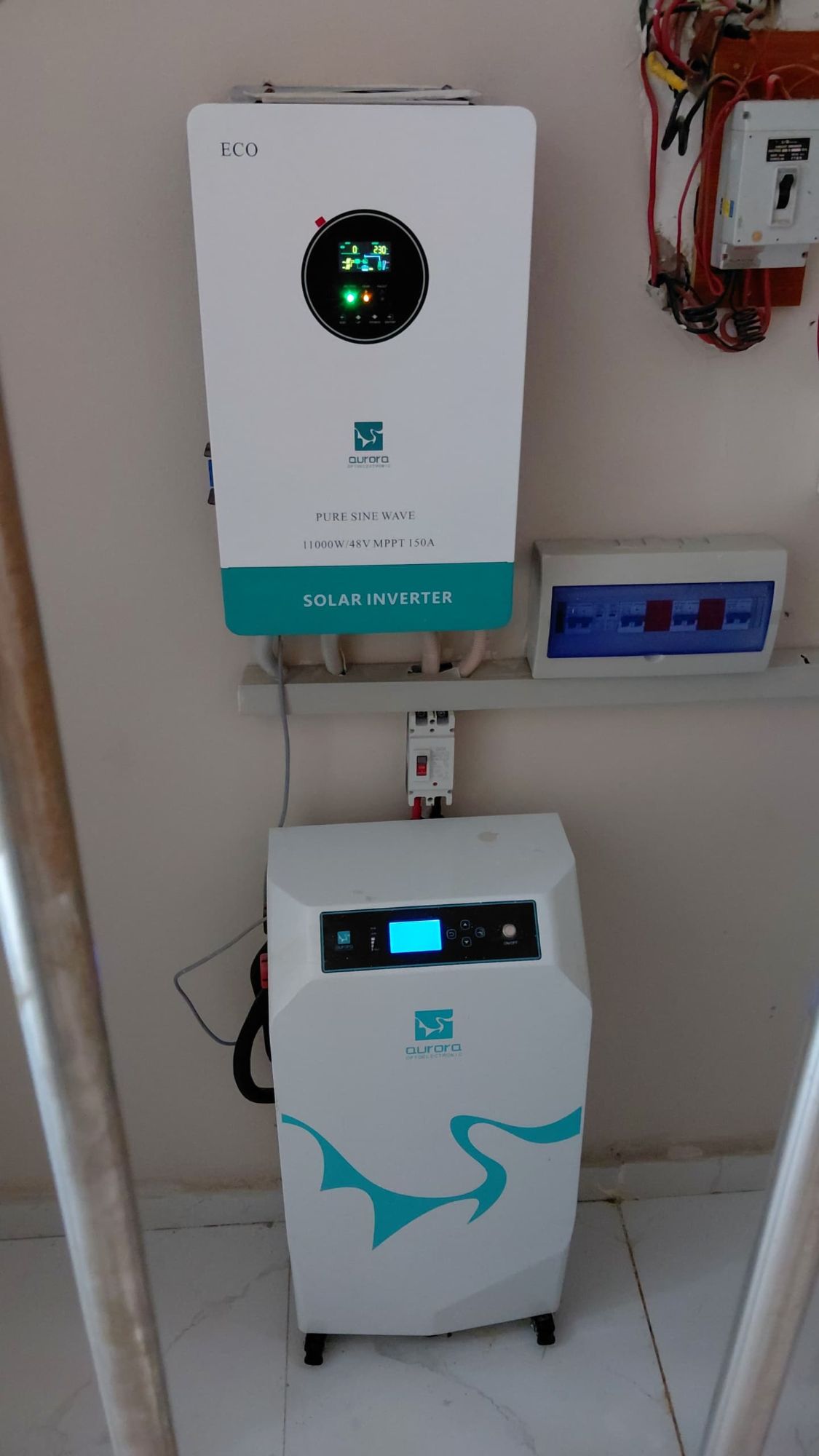
InfraSol installed twelve Trina Solar 625W monocrystalline panels (7.5 kWp) on a roof-mount rack, feeding an Aurora Solar 11 kW, 48V hybrid inverter with a 150A MPPT charge controller and Wi-Fi monitoring. Storage is a 16 kWh, 51.2V Aurora Solar LiFePO₄ battery rated for 90% depth of discharge, enough to carry the bedroom AC, the fridge and freezer and the lights from sunset to morning. On a clear Abuja day the array produces about 30 kWh, well above the 18 kWh the house uses, so the battery is full by early afternoon even after the pump has run. The installation includes a 125A DC breaker on the battery, DC and AC surge protection, full earthing with a lightning arrestor, and a changeover switch on the inverter output. Total installed price: ₦7.07M, including panels, inverter, battery, cabling and protection, installation and logistics.
The Outcome
The generator no longer runs. The whole house, including the bedroom AC overnight, runs from solar and battery
About ₦255,000 a month that used to go on diesel, generator upkeep and prepaid units now stays with the household
Payback of about 2.3 years (1.9–2.7 across the September 2026 diesel and grid range), with the panels warranted for 25 years
System Specifications
| Solar Panels | Trina Solar 625W monocrystalline, 12 panels, 7.5 kWp total |
| Inverter | Aurora Solar hybrid, 11 kW / 48V single-phase, 150A MPPT |
| Battery | Aurora Solar LiFePO₄, 16 kWh at 51.2V, 90% depth of discharge, 6000+ cycle life |
| Protection | 125A DC MCCB, 40kA DC and AC surge protection, earthing and lightning arrestor |
| Monitoring | Wi-Fi remote monitoring + InfraSol real-time platform |
| Financing | Outright purchase |
| Installation Date | July 2026 |
Financial Payback Analysis
System Lifecycle & Quality
Tier-1 Solar Panels: Industry-leading panels with 25-30 year lifespan and 25-year performance warranty. Expect 80-85% of rated output even after 25 years of operation.
High-Quality Lithium Batteries: Advanced lithium battery systems designed for 10+ years of reliable operation. Battery replacement typically needed after year 10-12, maintaining your savings throughout the system's life.
Note: These projections model realistic degradation for premium systems (~0.3% panel + ~0.5% battery per year), normal operating conditions, and regular maintenance. Actual performance may vary based on usage patterns and environmental factors.
Real-Time Monitoring
This system is monitored in real time via the InfraSol platform. Solar generation, battery state, grid usage, and load data are tracked at 5-minute intervals.
Learn about our monitoring platformReady to eliminate your diesel costs?
Get a free assessment of your energy usage and see what a solar + battery system would save you every month.